OpenAI's newest enterprise data contains a number that should make every AI transformation deck uncomfortable: the companies it labels "frontier firms" generate 8.3 times as many output tokens per active user as typical firms. In January, the gap was 2.6x. The models did not suddenly become three times smarter. The workflows changed.
That distinction matters. If your company's AI strategy is still mostly a chat window, buying access to a stronger model will not close the gap. The firms pulling away are wiring agents into repeatable work, giving them approved context and tools, and turning the best individual experiments into shared processes. The practical question is not whether your team should "adopt agents." It is which recurring task is safe enough to convert first, and what evidence should earn the next permission.
The rollout decision
OpenAI reports that Codex generated 64% of combined Codex and ChatGPT output tokens among enterprise customers in June. That is a usage measure, not a productivity score, and OpenAI's own explanation is careful: agentic workflows usually produce more output because they run through longer, multi-step tasks. Still, the direction is hard to miss. Enterprise usage is shifting toward delegated, multi-step work instead of one-off answers.
The next figure is even more useful for deciding what to do. Among weekly active users at frontier firms, 21% used plugins and 19% used skills. At typical firms, the figures were 9% and 3%. Those capabilities are not magic model upgrades. They package reusable instructions, company context, and connections to tools. In other words, they make the workflow portable instead of leaving it trapped in one employee's chat history.
Use this four-part test before turning a chat task into an agent workflow:
| Question | Start now | Wait |
|---|---|---|
| Is the task repeated often enough to justify setup? | Weekly or more | A one-off investigation |
| Can the inputs come from approved sources? | Documented systems and files | Personal or unknown data |
| Can a human review the output before consequences? | Drafts, reports, triage | Irreversible transactions |
| Can the workflow be measured? | Time, error rate, review effort | "It feels faster" |
A good first candidate is boring. Think weekly status synthesis, a support-ticket triage draft, a reconciled report, a release-note draft, or a code-review preparation step. The agent should gather information, produce a traceable result, and stop before it changes the world. Do not begin with payments, production writes, hiring decisions, or anything where a bad click is expensive.
The decision rule is simple: automate preparation before authorization. Let the system collect, classify, compare, and draft. Keep the final send, purchase, merge, permission change, or customer-facing commitment behind an explicit review step.
What to measure before scaling
The first pilot should look less like a product launch and more like a controlled experiment. Pick one workflow, one owner, and a fixed sample of real tasks. Record how long the manual version takes, how often it needs correction, and what information a reviewer needs to trust the result. Then run the agent on the same shape of work.
Measure four things. First, completion quality: did the output satisfy the task, not merely produce plausible text? Second, exception rate: how often did the workflow need a human rescue or a second attempt? Third, review cost: did checking the agent take less time than doing the work manually? Fourth, total cost: include model usage, tool calls, failed runs, and the employee time spent supervising it.
That last measure is where many pilots quietly lie. A workflow can produce more output while creating more review work. OpenAI's 64% Codex figure says that agentic usage is substantial. It does not prove that every token created business value. Treat it as a signal that the operating model is changing, not as a return-on-investment calculation.
For a practical pilot, keep a small log with fields like these:
Task ID
Input sources used
Actions taken
Output accepted: yes/no
Human corrections
Escalation reason
Elapsed time
Estimated model and tool cost
Run at least enough cases to catch the awkward ones. Ten clean examples are not evidence that an agent is ready for the whole department. Include missing fields, conflicting records, permission errors, stale documents, and tasks that require the system to say "I need a human." The refusal path is part of the product.
The existing NestFrontier guide on a small task test makes the same broader point: test a cheap slice before spending heavily on a full evaluation. For agent workflows, add one more requirement. Log every external action and make write operations idempotent. A timeout should not cause a completed action to run twice. The article on idempotent agent actions covers that failure mode in detail.
The part vendors understate
The frontier-firm gap is probably a workflow gap, but the evidence has limits. The figures come from OpenAI's enterprise customer data and use output tokens per active user as a depth-of-use proxy. They do not isolate model quality, employee skill, implementation budget, industry mix, or the value of the work produced. A company can generate eight times more tokens and still be wasting eight times more time.
There is also a selection problem. Firms already willing to connect tools, define skills, and instrument workflows are likely to appear among the heavy users. The data tells us what advanced adopters do, not that plugins alone caused the gap. That is why the right response is not to copy a feature checklist. Copy the discipline: choose a recurring task, constrain the inputs, keep authority narrow, measure the whole loop, and expand only after the failure modes are boring.
The migration path is therefore staged. Chat remains useful for exploration. A reusable skill or plugin is appropriate when a task has a stable shape and approved context. An agent with write access comes later, after the team can show reliable completion, bounded permissions, audit logs, and a recovery path. If you cannot explain what happens when the model is wrong, the workflow is not ready for autonomy.
OpenAI's report frames the change as a shift: assistants answer, agents execute. The sharper reading is that enterprise AI is becoming an operations problem. The winners will not be the teams that send the most prompts. They will be the teams that turn one useful prompt into a process another person can run, inspect, and safely stop.
Sources
- OpenAI enterprise AI report: August 12, 2026 analysis of the shift toward agent execution, including 64% Codex usage and the 8.3x frontier gap
- OpenAI Enterprise Signals: methodology and June 2026 usage figures for frontier and typical firms
- ChatGPT Enterprise and Edu release notes: enterprise availability for skills, plugins, and workspace agents
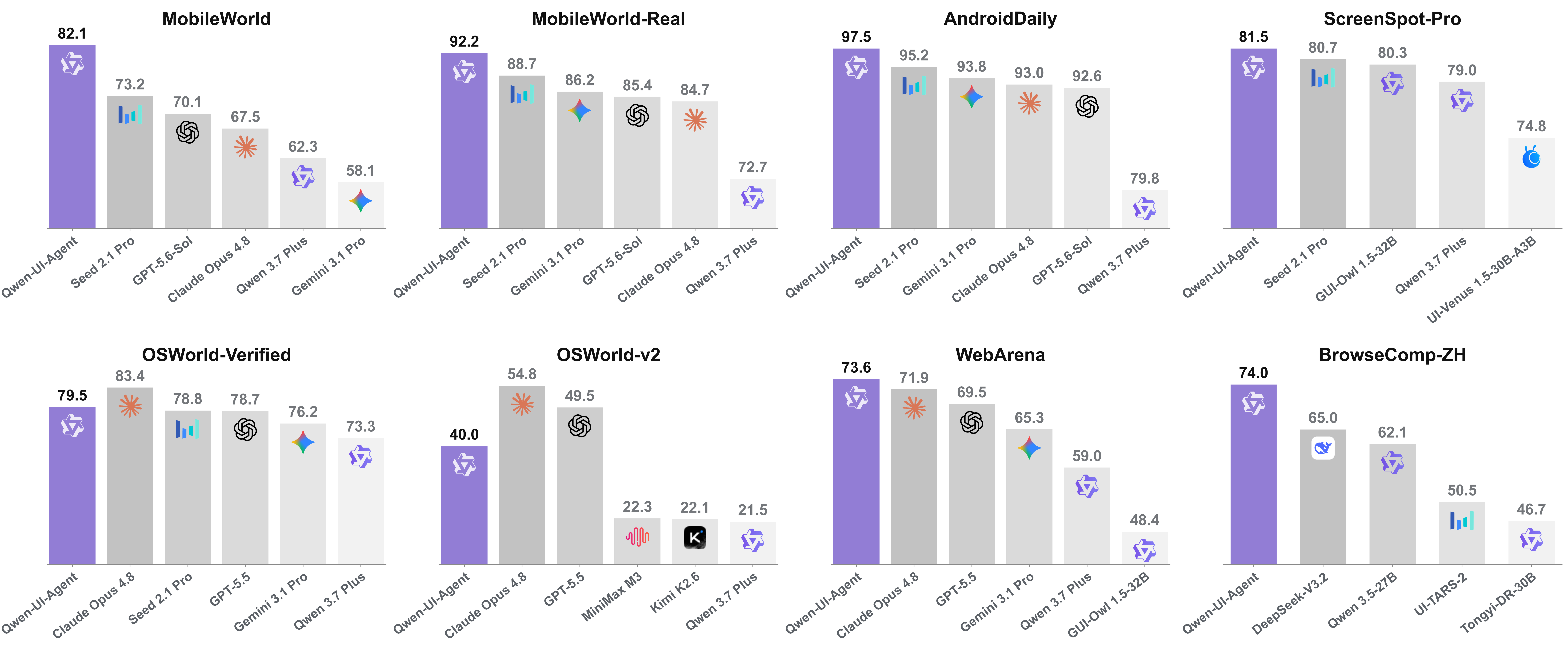
- Qwen-UI-Agent project repository: source of the technical chart used as the article image