Something weird is happening inside GPT-5.5 when it runs on Codex. A developer named vguptaa45 dug through 390,195 token-count records spanning February through June 2026 and found that GPT-5.5 responses keep landing at exactly 516 reasoning tokens. Not approximately 516. Not "around 500." Exactly 516. And when they do, complex tasks tend to fail.
The pattern showed up in a GitHub issue on June 27, and it's been sitting at 7 points on Hacker News since. Here's the weird part: this isn't a general GPT-5.5 problem. It's specific to Codex's reasoning pipeline, and the numbers are hard to explain away.
The 516-token wall
Out of 390,195 response-level token records, 3,363 hit exactly 516 reasoning tokens. GPT-5.5 produced 19.3% of all responses in the dataset but accounted for 82.0% of those exact-516 events. That's a 33.6x higher ratio than every other model combined.
The secondary spikes at 1034 and 1552 are harder to ignore. Those aren't random numbers. 516, 1034, and 1552 look like threshold boundaries, hard caps on how many reasoning tokens the model is allowed to generate before it's forced to stop and produce an answer. If you squint, it looks like the reasoning budget got tiered: one "level" at 516 tokens, two at 1034, three at 1552.
Here's what makes this suspicious. The clustering got dramatically worse over time. In February 2026, only 0.11% of responses with 516+ reasoning tokens hit exactly 516. By May, that number was 53.3%. In June it dropped slightly to 35.8%, but the overall trend is clear: as GPT-5.5 became the default model for more Codex users, the exact-516 pattern intensified.
Meanwhile, overall reasoning-token intensity actually decreased. Mean reasoning tokens fell to 168.5 in June, down from 268.1 in February. The P90 fell to 515, down from 772. So the model was generating fewer reasoning tokens on average, but the ones it did generate were increasingly clustering at fixed points. That's not what you'd expect from a model that's just "thinking less." That's what you'd expect from a budget constraint kicking in.
Why this matters for anyone using Codex
The issue author linked to an earlier report (#29353) where GPT-5.5 runs ending at exactly 516 reasoning tokens returned wrong answers on complex tasks. The aggregate data reinforces that: when GPT-5.5 hits the 516 wall, the output quality drops.
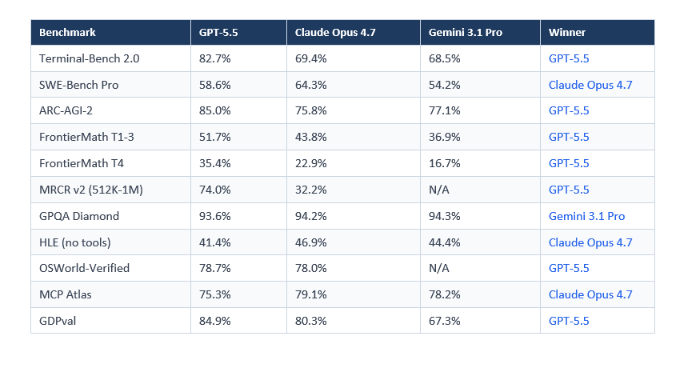
This isn't a minor nuisance. GPT-5.5 scored 82.7% on Terminal-Bench 2.0, leading all public models in agentic coding. But if 44% of its reasoning-token completions at the 516+ threshold are landing exactly at 516, and those completions correlate with errors, then the benchmark numbers might be masking a real reliability problem on harder tasks.
Compare across models: GPT-5.4 shows a 19.8% exact-516 ratio, which is noticeable but much lower. GPT-5.2 sits at 0.34%. GPT-5.3-codex and its Spark variant? Zero percent. The anomaly is concentrated in GPT-5.5, which is the model OpenAI shipped as a complete ground-up retrain, the first since GPT-4.5.
The question nobody's answering yet: is this a reasoning-budget cap, a routing quirk, a scheduler behavior, or something in how Codex allocates tokens to the reasoning chain? The issue author asked OpenAI directly. No response yet.
What you should actually do about it
If you're running Codex with GPT-5.5 on complex tasks, start tracking your reasoning-token distributions. The issue author's recommendation is solid: log model name, reasoning effort, output-token details, latency, retry counts, task class, and correctness labels together. Look for exact-token plateaus. If your 516-token completions are failing at a higher rate than your 400-token completions, you've found the same pattern.
This is the kind of telemetry that most teams don't collect because it feels like overkill. But when a model's reasoning behavior has hard thresholds, aggregate metrics like "average tokens per response" become meaningless. You need the distribution, not the mean.
OpenAI hasn't acknowledged this publicly. The GitHub issue is community-supplied evidence, not an official bug confirmation. But the data is specific enough (390K records, model-specific, statistically unusual, that it deserves investigation. If you're building production workflows on GPT-5.5 Codex, this is worth monitoring before it bites you in a release.
Sources
- OpenAI Codex GitHub Issue #30364: original report with full dataset, model comparisons, and monthly trend tables
- Let's Data Science analysis: breakdown of the 390K-record dataset and actionable recommendations for engineering teams
- GPT-5.5 Review 2026: Benchmarks and Analysis: GPT-5.5 context (Terminal-Bench scores, pricing, and how it differs from GPT-5.4
- Hacker News discussion: community reaction and TL;DR of the clustering phenomenon