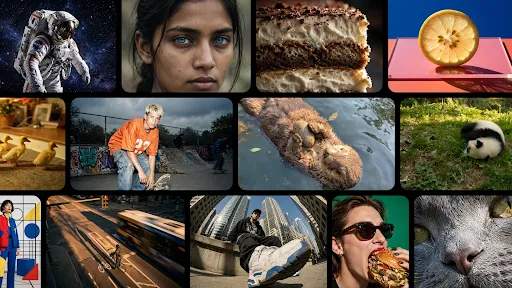
Meta launched Muse Image on Tuesday. By Friday, it was gone. Three days. That is how long it took for the company's first image-generation model from its new Superintelligence Labs division to go from "our most advanced image generation model yet" to "this feature missed the mark."
The speed of the reversal tells you something Meta probably does not want you to think about too carefully.
What Muse Image actually did
Muse Image was an AI image generator baked into Instagram Stories, WhatsApp, and the Meta AI app. On the surface, it looked like standard fare: text-to-image generation, prompt-based editing, some preset templates for people who cannot be bothered to think of their own prompts. Meta even previewed Muse Video, an upcoming video generator, as if the whole thing was going swimmingly.
But the feature that lit the fuse was the Instagram integration. Users could @-mention any public Instagram account inside the Meta AI app, and Muse Image would pull that person's photos into the generation. Your face, your vacation pictures, your kids, all fed into someone else's AI creation. And here is the part that made privacy experts reach for their phones: the feature was opt-out by default. If your Instagram account was public and you did not dig into settings to disable it, your photos were fair game. You would not even be notified when someone used them.
Meta's help page said it plainly: "People may be able to create content with your Instagram content using AI features at Meta" if you left the default settings alone. "You will not be notified about content created using AI features at Meta."
The backlash was immediate and bipartisan
SAG-AFTRA, the actors' union that spent 2023 on strike partly over AI likeness rights, issued an emergency opt-out guide. "Meta now lets anyone use your Instagram photos in AI images without your consent," the union wrote, walking members through the buried settings menu where you could toggle off "Allow people to use your content on Instagram and with AI features on Meta."
CAA, the talent agency representing some of the biggest names in Hollywood, said it raised concerns directly with Meta. "No one's name, image, likeness, voice or creative work should be used by any third party, including AI models, without clear, documented consent," the agency said.
Hannah Einbinder, the Emmy-winning star of Hacks, posted on Instagram urging her followers to turn the feature off. Privacy International told the BBC the tool was "the latest sign AI companies see people's images and data as raw material to be exploited."
What made this backlash different from the usual AI outrage cycle was who was angry. This was not just privacy advocates and academics. This was Hollywood talent agencies, actors' unions, and ordinary Instagram users all reading the same thing in Meta's announcement: your public photos are training data now, and you do not get a say.
The opt-out pattern keeps repeating
If this feels familiar, it should. OpenAI launched Sora with a nearly identical opt-out structure earlier this year and eventually killed the whole product. The pattern is consistent: a company builds a feature that treats public content as AI fuel, sets opt-out as the default, faces backlash, and then retreats. The retreat always comes with the same framing. Meta's statement was textbook: "Our intent was to provide a useful creative tool and to give people control over whether their public content could be referenced in this way. We've heard the feedback that this feature missed the mark."
The phrase "missed the mark" is doing heavy lifting there. It implies a miscalibration, a timing issue, a UX problem. But the core design choice was not an accident. Someone at Meta decided that public Instagram photos should be usable for AI generation by default, that users should not be notified, and that the burden of protecting your likeness should fall on you, not on the company using it.
This is not a bug. It is a business strategy. Every major AI company has made the same bet: that public data is free for the taking, and that the legal and social norms around consent will eventually catch up to the technology rather than the other way around.
What happens next
Meta is still pushing ahead. Muse Spark, a different AI model, launched the same week. Muse Video is in development. The company is spending tens of billions on AI infrastructure this year and has no intention of slowing down. The $1.4 trillion lawsuit from state attorneys general over deceptive data practices is still pending. Creators and publishers have their own separate legal action in progress.
The 72-hour lifespan of Muse Image does not mean Meta learned a lesson. It means the backlash was loud enough, fast enough, and came from powerful enough actors to make the reputational cost exceed the data-collection benefit. SAG-AFTRA and CAA have the resources and the platform to make this hurt. The average Instagram user who does not want their face in someone else's AI art does not.
Meta will try this again. The question is not whether the next version will use public content for AI generation by default. The question is whether they will call it something different and hope nobody notices.
Sources
- Meta AI Blog: Introducing Muse Image and Muse Video: official launch announcement with feature details and Content Seal watermark info
- The Guardian: Meta ditches Muse Image AI feature: coverage of the removal and SAG-AFTRA response
- TechCrunch: Meta rolls out Muse, a new AI image generator: launch day reporting with feature breakdown
- Variety: SAG-AFTRA Slams Meta AI for Using Your Instagram Photos: union's opt-out instructions and consent framing
- Tubefilter: Meta's latest feature uses Instagram content for AI fodder: CAA response and broader industry reaction
- Wired: Meta Now Lets Anyone Use Your Instagram Photos in AI Images Unless You Opt Out: detailed opt-out walkthrough and help center quotes